
Every season designers present their new fashions and “hot” colors based on color selections from a secret color committee.
Since Ashley posted about the “hot” color Honeysuckle and last week my post was about the colors of Carnival, this seems an appropriate follow-up.

How are those “in” colors determined and by whom? According to NPR , trends are rarely decided by individuals. They are selected by a secret color committee. One of the most powerful committees is a group of 10 people whose names remain a secret. They are invited by Pantone to meet twice a year in Europe in an all white room so as not to be distracted in making their selections. Pantone, a New Jersey company whose sole business is color, is unrivaled in setting the standard for color tones. NPR, a market research group, says Pantone is involved in the coloration of nearly half of all the garments sold in the US. Designer David Shah runs Pantone’s committee meeting and seeks advice from people in various industries. Shah said, “I can’t tell you the names. They’re involved with everything from furniture through to clothing and knitwear.”
Pantone’s vice president for fashion, home and interiors, Laurie Pressman, says the reason for color standards is to provide a vocabulary via swatches, color books and computer files, to enable developed-world companies to talk to their overseas suppliers. “What you have now is so much production shifted to Asia,” she says. “It’s very key to have a standard way to communicate from the design side all the way down through the supply chain.” There are 1,925 colors in Pantone’s index of textile colors and each one has a unique identifying number. At Casart coverings, all of our designs can be matched to Pantone colors.
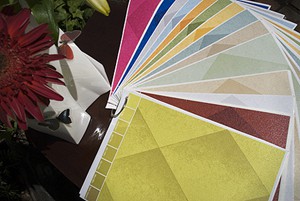
Alright, I bet I can guess the question you are just dying to ask: why would any designer in his/her right mind want to be like all the others. John Crocco, the creative director for Perry Ellis, calls color forecasts a self-fulfilling prophecy. He says that if designers choose to follow such forecasts, then they’ll be “part of what ultimately becomes the trend.” Ignoring the trend is risky business and can result in irrelevance for the designer. So I guess in this case it’s unwise to be a salmon! (I wonder what’s the Pantone # for salmon)
– Lorre Lei










Leave a Reply