
Tortoise shell, tortoiseshell, tortoise-shell: no matter how you spell it, it’s popular and has staying power. The earliest use of tortoiseshell dates back to decorative uses in China and Japan. Often, a whole turtle shell was lacquered and used as a bowl. The Ancient Greeks and early Romans also used tortoise shell in jewelry, to back hairbrushes and in hair ornaments. Trade in true tortoiseshell had a devastating effect on the hawksbill turtle population. Although it exists worldwide, primarily living in coral reefs, the hawksbill is considered to be severely endangered and the trade of tortoise-shell worldwide was banned under the Convention on International Trade in Endangered Species. Concern for extinction and difficulty in harvesting led to celluloid (an early version of plastic) exhibiting the desirable tortoiseshell design. By the 1920s and 1930s, tortoiseshell frames for eyeglasses were primarily made of celluloid. Today, tortoiseshell, or tortie in a commercial sense, is a mottled brown, black and sometimes orange pattern, often made of plastic, which is used to make a variety of products.
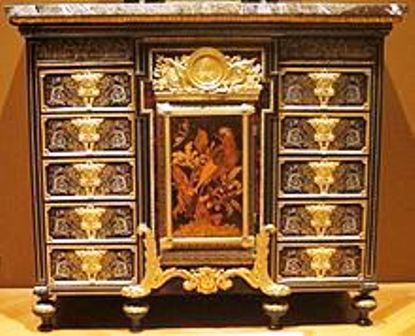
Andre-Charles Boulle (1642-1732) was the French cabinetmaker who is generally considered to be the preeminent artist in the field of marquetry. His fame in marquetry led to his name being given to the fashion he perfected of inlaying brass and tortoise-shell, known as Boulle.

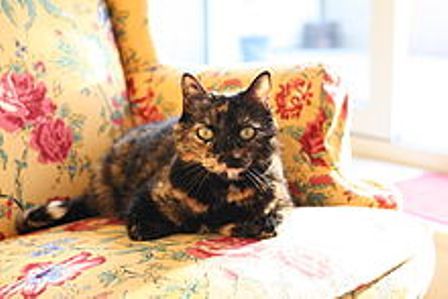
There are also tortoiseshell cats with a coat coloring found almost exclusively in female cats. Cats of this color are mottled, with patches of orange or cream and chocolate, black or blue. They are sometimes called torties. Cats of this coloration are believed to bring good luck in the folklore of many cultures. Tortoiseshell cats are said to be strong-willed, fiercely independent, hot-tempered and very possessive of their owners. They are also said to be more vocal and likely to hiss, meow loudly or purr strongly to make their needs known. This personality is known as tortitude.
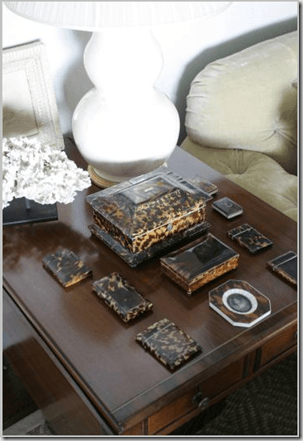
I assure you no turtles were harmed producing the faux tortoiseshell design from the Karen Robertson Collection. It would be stunning to line the back of a bookcase or to embellish a piece of furniture, even used as stair risers.

This month we will be offering the faux tortoiseshell and the Mary Douglas Drysdale Faux Linen which were both featured in the December/January issue of House Beautiful for sale. Our rolls will remain available for wholesale accounts but for an upcoming limited time with our sale, they will be available to all. So watch for the sale and happy shopping!
– Lorre Lei










Leave a Reply