
The latest, September issue of House Beautiful is chock full of colorful ideas but I was most happy to see the article regarding surprising uses of bold color throughout early American history. Appreciating Art History, this was right up my alley.
Newell Turner, the new editor-in-chief of House Beautiful, makes his second issue introduction with a bold splash of color. His description of the multitude of choices that one faces at the paint store when trying to make a selection describes the confusion from all the possibilities quite well. I think it is not unlike choosing from an a-la-carte, gourmet-food menu, in the sense that there are so many choices and things to consider that even though you’d like to try them all, it’s often too overwhelming to narrow the field. (This is usually when I get called in by a client.) His sentiment, “When it comes to painting a room, it’s more than matching a paint chip to a petal–color alone isn’t going to capture the beauty of a rose. A finish brings magic to the color,” is a quote worth repeating to every client I meet. And I’ll add, “it can be a scientific art.”
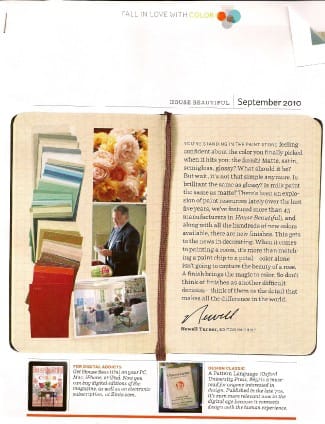
So much depends on the lighting within your environment, which is determined by so many factors: the amount of natural light and the type exposure (N, S, E, W), ambient lighting, trees and natural shadows cast from outside in, to time of day, etc. The type of finish, matte to high gloss, adds another dimension in the choosing. As it turns out and it shouldn’t be all that surprising, our Colonial ancestors were “flashier than we thought.” Actually, using bright colors was not only a way to spruce up one’s interior and make a statement with bold color but also express wealth — in being able to afford because the pigments were expensive to produce. It seems like making statements with bold color is timeless as choices tend to be going in this direction again. I also find it interesting that a high gloss finish is making a comeback. I love it’s reflective quality.

I’m lucky to live so close to many of these historical places to view these early interior colors in person. Mt. Vernon, George Washington’s home is right down the street (parkway rather) from me. It’s not in this article, but as a decorative painter, I always found it amusing and intriguing that our first President was practical enough to use trompe l’oeil painting of faux stone on part of the outside of his mansion rather than the real thing. This was the more economical route to take, however, he still wanted the more expensive look of a stone facade.

I visited Frank Lloyd Wright’s famous Fallingwater site for the first time last fall and it was a remarkable setting. If you like these types of earthtone colors, Pittsburgh Paints now offers 13 different shades inspired from their participation in the site’s restoration.

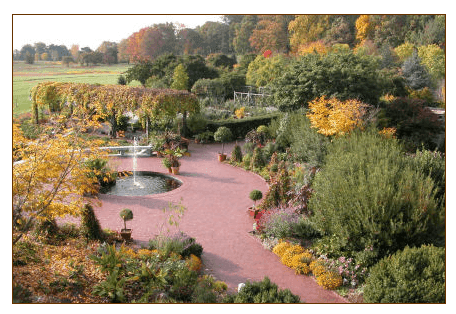
Another great and often overlooked source for early pigments is the National Arboretum’s Herb Garden, which grows plants used throughout history and documents their purpose. What a beautiful and pleasant way to learn about gardening and history at the same time. It’s one of my favorite places.
The items above are just a few of the many inspirational sources for over 275 different types of color choices that Casart Coverings offers, as well as customization to match most any paint color. The choices are virtually endless — a gourmet paint palette worth savoring.
— Ashley










Leave a Reply