
Not to belabor the dress debate, which is more an important discussion about color in general, we’d like to herald the much-anticipated coming springtime, just over 2 weeks away, with our Birds & Birch, Singing Spring Birds, monthly March Sale. Go to our website to see the details.

However, getting back to the dress, it brings up an important discussion (more than a debate) about color. We love that! We love color. With custom printed wallcoverings, we deal with subtleties of color daily. We know how it can can change depending on light and shadow and with many factors.
We suggest our customers order a sample first to be sure of the color they are ordering because when they only view a design on the computer, it is backlit and also affected by the surrounding color that is processed in the brain. Because there are so many factors that affect color we want you to be sure that the design you like looks like what you envision it will in your environment. This will have different lighting than on a computer.
There is also a certain degree of natural-occurring variation in the printing of color. This is similar to fabric runs when they are printed at different times, as our wallcoverings are printed upon ordering. Our different materials, print methods and even environmental, temperature factors can create variations of the same printed color. There is a lot to consider and we try to make it less complicated but suggesting getting a sample is a good place to start if your foremost concern is color.
Here’s a quick visual example involving the dress, only because it’s a good one to show how light affects color.
We saw this image first which made us think the dress was originally white and gold but appearing blue and brown (not black) because it was in shadow (middle photo). We didn’t realize the dress was actually blue and black, which makes sense, considering what bride’s mother would also wear white to their daughter’s wedding? Even though, on a side note, I wore champagne white and the bride’s mother wore blush to her daughter and my son’s recent wedding. The bride wore white-blush. We tried to stick to a color theme. Personally, I also believe this dress is prettier in the first two exposures than the last.

In a recent explanation about optical illusions when viewing color via these articles in the Washington Post, Wired and MIT, I couldn’t help recall my basic art classes in how light and shadow can completely change a color or perception of a color. This premise can give us the impression that the dress can be both white and gold & blue and black, depending on what surrounding color (or white balance, in this case) in which it is viewed.
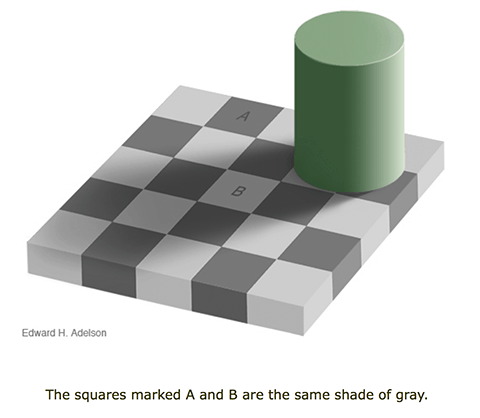
Also, when your eye visualizes a color and it disappears from the spectrum, the flash of the opposite color on the color wheel tends to take its place*, as seen by staring at the center of this image. The lilac circles turn green as they rotate.

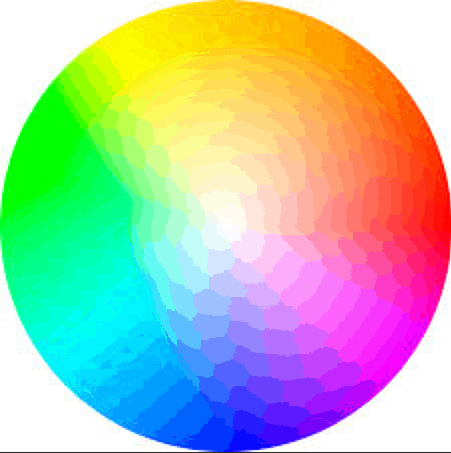
*Side note: Have you ever seen the elusive green flash from a sunset as the sun disappears below the horizon? Searching for the green flash during summer vacation has become an annual activity. It can also be explained by atmospheric factors, the horizon and speeds of certain colors in the light spectrum.
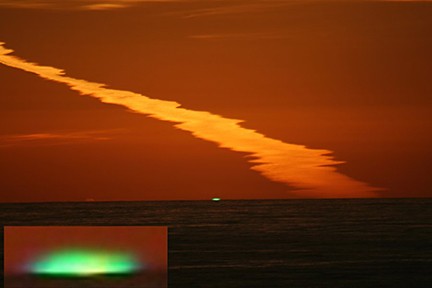
As you scroll this dress image up the screen it may change from white + gold (which appears light blue and brown in shadow) to a darker blue and black — depending on how your eyes and brain process the information. Use your hand to cover up each half of the dress to see for yourself. Because there is a middle-ground gradient in this photo for how the colors can appear on either extreme, you brain tends to choose one path over the other.
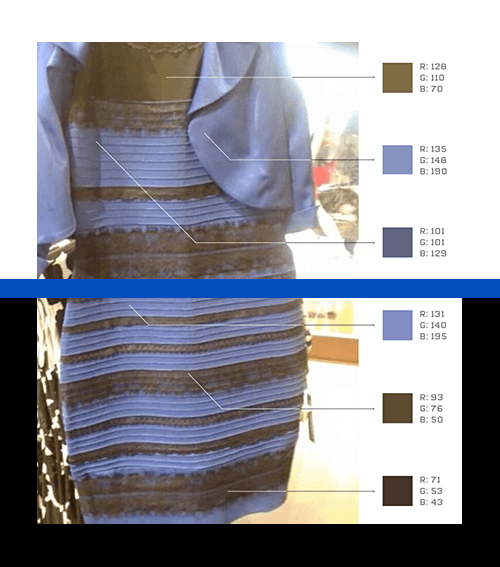
Besides the discussion about color that this washed-out photo of the dress inspired, we were equally fascinated with how many people were discussing it — within an instant. That’s pretty amazing considering that communication is now within seconds globally.










Leave a Reply